

Blouse Stitching Tips A Complete Guide for Perfect Fit & Style
Introduction
Blouse stitching is not just about sewing fabric together—it’s an art that defines the elegance of your entire outfit. Whether you’re designing for daily wear or special occasions, mastering the blouse stitching technique can completely transform your results.
I’ve personally seen how even a small measurement or stitching can ruin an otherwise beautiful blouse. On the other hand, when done right, a well-stitched blouse enhances confidence and gives a professional finish.
In this guide, you’ll learn practical, experience-based blouse stitching tips that go beyond basics—helping you achieve a flawless fit, clean finishing, and stylish designs.
Understanding Fabric & Design (Before You Start)
Before you even touch the needle, choosing the right fabric and design is crucial.
Fabric Selection Tips
Different fabrics behave differently during stitching:
| Fabric Type | Difficulty Level | Best For |
|---|---|---|
| Cotton | Easy | Daily wear blouses |
| Silk | Medium | Festive & wedding blouses |
| Georgette | Hard | Designer & party wear |
| Velvet | Hard | Winter & heavy designs |
👉 Tip: Always pre-wash cotton fabrics to avoid shrinkage after stitching.
Blouse Stitching Tips: Cutting & Measurement
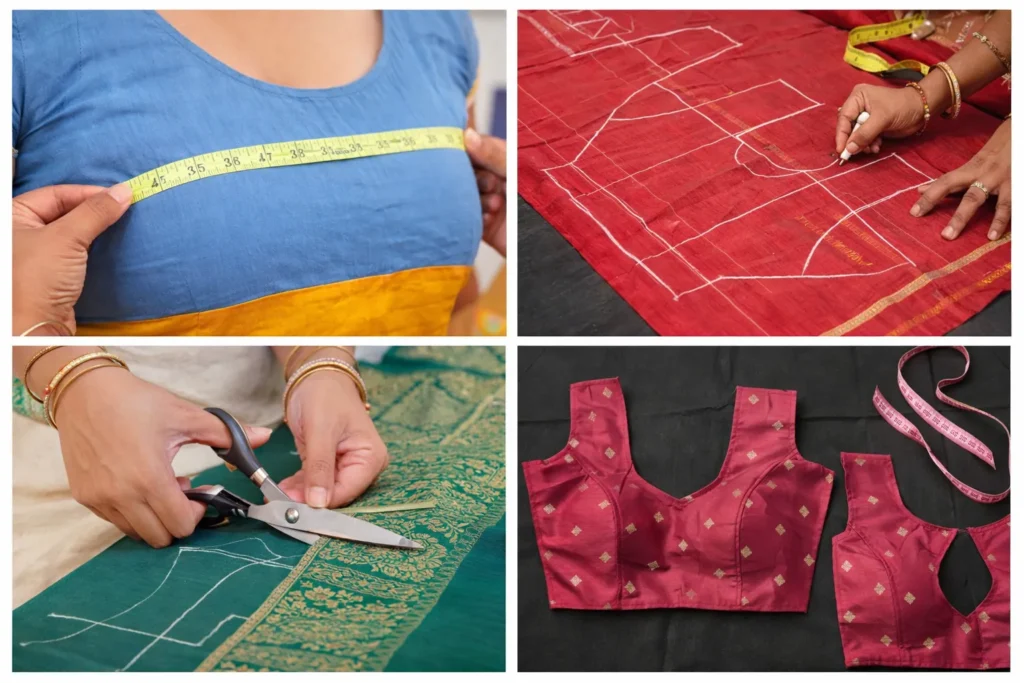
Accurate measurement is the backbone of a perfect blouse.
1. Take Proper Measurements
Key areas to measure:
- Bust
- Underbust
- Shoulder width
- Armhole
- Blouse length
👉 Pro Tip: Always leave 1–1.5 inches extra margin for adjustments.
2. Marking & Cutting Fabric
- Use chalk or a fabric marker for clean marking
- Cut on a flat surface
- Follow the grain line to avoid twisting
👉 Mistake I made early: Cutting fabric without aligning properly led to uneven fitting—avoid this at all costs!
Comparison: Hand Stitching vs Machine Stitching
| Feature | Hand Stitching | Machine Stitching |
|---|---|---|
| Speed | Slow | Fast |
| Precision | Medium | High |
| Finish | Basic | Professional |
| Best For | Beginners & detailing | Bulk & clean finishing |
👉 Insight: Use machine stitching for structure and hand stitching for finishing details like hooks or embroidery.
Blouse Stitching Tips for Perfect Fit
3. Focus on Fitting First
Even the best design fails without proper fitting.
- Keep darts aligned with the bust point
- Ensure shoulder seams sit perfectly
- Avoid tight armholes
👉 Golden Rule: Fit should be snug but comfortable—not too tight.
4. Stitching Darts Correctly
Darts shape the blouse:
- Start wide and taper gradually
- Press darts downward for a neat finish
👉 Small detail, big impact!
Neckline & Sleeve Design Tips
5. Perfect Neckline Stitching
- Use interfacing for stability
- Stitch slowly around curves
- Clip edges for smooth turning
Popular styles:
- Boat neck
- Sweetheart neck
- Deep back neck
6. Sleeve Stitching Tips
- Match the sleeve curve with the armhole
- Avoid wrinkles by easing the fabric
- Add lining for silk blouses
👉 Pro Insight: Decorative sleeves can elevate a simple blouse instantly.
Finishing Techniques (Game-Changer Tips)
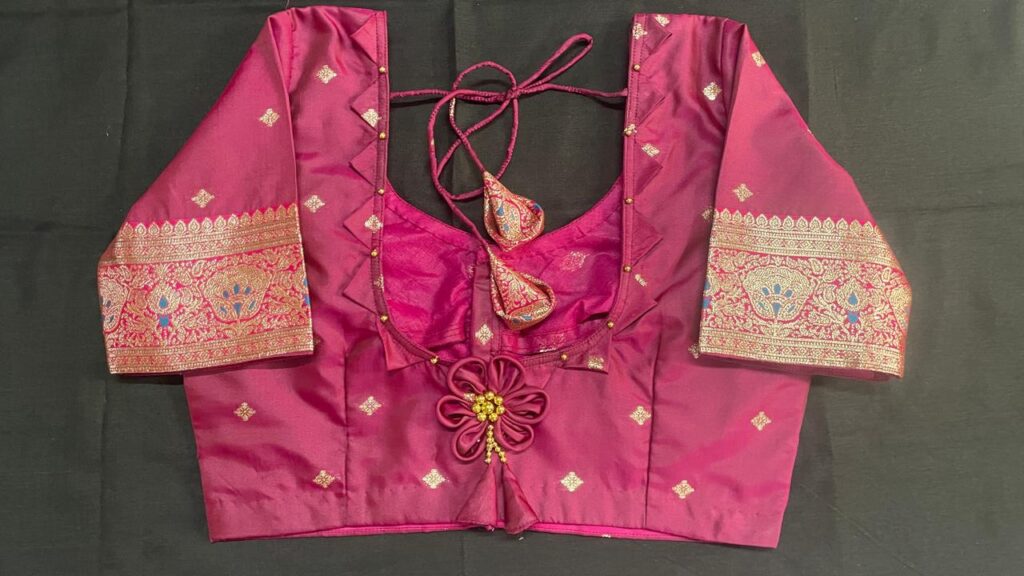
7. Clean Finishing Matters
- Use overlock or zig-zag stitch
- Trim extra threads
- Press seams properly
👉 A well-finished blouse looks store-bought—even if handmade.
8. Hooks, Zips & Dori (Tie-up)
- Place hooks evenly
- Reinforce the zipper area
- Use a strong thread for dori
👉 Personal tip: Always double-stitch the dori area—it faces the most tension.
Common Mistakes to Avoid
- ❌ Skipping measurements
- ❌ Cutting without marking
- ❌ Ignoring seam allowance
- ❌ Rushing the stitching process
👉 Take your time—good stitching requires patience.
Advanced Blouse Stitching Tips
9. Add Lining for Structure
Lining improves:
- Shape
- Comfort
- Durability
10. Experiment with Designs
Once confident, try:
- Backless designs
- Patchwork blouses
- Embroidery work
👉 Creativity is what sets your blouse apart.
Key Insights Summary
- Accurate measurement = Perfect fit
- Fabric choice impacts stitching outcome
- Finishing techniques define quality
- Practice improves speed and precision
Conclusion
Mastering these blouse stitching tips can take your skills from beginner to professional level. It’s not about having expensive tools—it’s about understanding technique, practicing consistently, and paying attention to details.
Every blouse you stitch teaches you something new. Keep experimenting, learning, and refining your craft.
Call-to-Action (CTA)
Have you tried stitching your own blouse? Share your experience or challenges in the comments—I’d love to help you improve!

Pingback: 10 Years Baby Frock Cutting and Stitching Bangla Tutorial - Blousestitching
Pingback: Top 5 Latest Designer Saree Blouse Back Neck Designs for Women 2026 - Blousestitching